Unlocking Culinary Potential: Unexpected Fiddlehead Pairings
Have you ever savored the fleeting joy of fiddlehead ferns, those tightly coiled emerald treasures, and wondered how to truly make them sing on the plate? Their season is brief, their flavor distinct – a delicate balance of green, earthy, and subtly nutty notes that can be as elusive to pair as they are to forage. But what if we told you that science holds the key to unlocking their full culinary potential?
The Allure of the Fiddlehead: Aromatic Deep Dive
Fiddlehead ferns, the unfurled fronds of young ferns, are a quintessential taste of spring. Often compared to asparagus or green beans, they boast a more complex profile. At their core, fiddleheads are rich in vibrant green aldehydes. Think of (Z)-3-hexenal, which imparts that unmistakable fresh-cut grass aroma, or hexanal, delivering raw, verdant notes akin to green beans. These molecules are the backbone of their spring-like character.
Beyond the initial burst of green, fiddleheads reveal deeper layers. Subtle earthy and slightly nutty nuances often come from various pyrazines, such as 2,5-dimethylpyrazine, which contributes a roasted, sometimes popcorn-like quality. Some varieties also present delicate sulfur compounds, bridging their flavor profile towards the savory notes found in asparagus. This intricate aromatic fingerprint makes them both a delight and a challenge for chefs.
Pairing Fiddleheads: A Scientific Approach
Understanding these core aroma compounds allows us to build harmonious pairings. We look for ingredients that share these green, earthy, or nutty notes, or those that offer a complementary contrast, enhancing the fiddlehead’s inherent beauty.
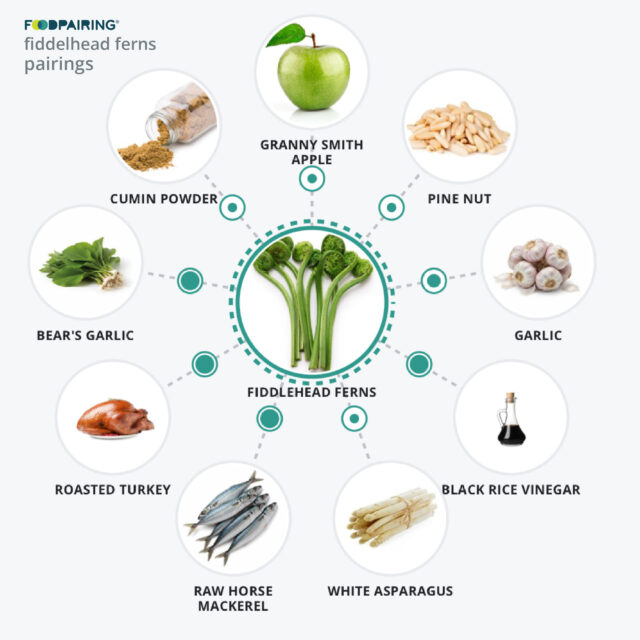
1. Fiddleheads + Earthy & Nutty Companions: Deepening the Forest Floor
To amplify the earthy and nutty undertones of fiddleheads, look to ingredients that share these characteristics. Roasted Turkey, with its rich, savory profile, is an excellent choice.
Why it works: Roasting processes in turkey produce various alkylpyrazines and furans, which are responsible for its roasted, nutty, and savory aromas. These compounds resonate beautifully with the pyrazines found in fiddleheads, creating a synergistic effect that enhances the overall earthiness. Imagine a simple preparation with fiddleheads and a touch of hazelnut oil to further draw out these shared notes.
2. Fiddleheads + Acidic & Fruity Contrasts: Brightening the Palette
Sometimes, a direct contrast can be just as compelling. The delicate bitterness and green notes of fiddleheads can be wonderfully lifted by a touch of acidity or fruit. While not directly sharing aroma compounds, ingredients like Green Apple offer a compelling counterpoint.
Why it works: Green Apple is renowned for its crisp tartness, driven primarily by malic acid, and its fresh, fruity character from various esters. This acidity can cleanse the palate, highlighting the fiddleheads’ freshness, while the fruity esters provide an aromatic bridge, adding complexity without overpowering. A light vinaigrette with a hint of green apple could be transformative.
Another recently added gem, Black Rice Vinegar brings a complex acidity with balsamic and slightly smoky nuances, along with umami notes. Its acetic acid and other volatile acids cut through any potential bitterness in the fiddleheads, while its depth can complement their earthy characteristics. A splash in a stir-fry or as part of a marinade for roasted fiddleheads would be exceptional.
3. Fiddleheads + Fatty Fish: A Symphony of Green and Umami
One of the most classic pairings for green vegetables is with rich, fatty fish. Consider Grilled Mackerel, a recently added ingredient to our database, alongside fiddleheads. Mackerel, especially when grilled, retains its rich texture and a wealth of marine and fatty notes.
Why it works: The green aldehydes in fiddleheads cut through the richness of the mackerel, while volatile sulfur compounds like dimethyl sulfide (found in marine environments and contributing to the “oceanic” scent of fish) can find common ground with subtle sulfur notes in the ferns. The savory umami of the fish also beautifully complements the fiddlehead’s mild bitterness, creating a well-rounded experience.
Ready to explore this pairing? Discover more fiddlehead and mackerel pairings on our Foodpairing® Tool.
 Fiddlehead fern salad with eggs, fish, mango and crispy sweet potato by @chefatul_lahkar
4. Fiddleheads + Aromatic Herbs & Spices: Green on Green
It’s no surprise that other green, aromatic ingredients can harmonize with fiddleheads. Basil, a common herb, or even the intriguing Bear’s Garlic (also trending), offer exciting possibilities.
Why it works: Basil is rich in compounds like linalool (floral, woody) and eugenol (clove-like, spicy), but also contains green notes that can align with fiddleheads. Bear’s Garlic, or wild garlic, offers pungent, fresh sulfur compounds (like diallyl disulfide) that parallel some of the subtle sulfur notes in fiddleheads, creating a robust, savory pairing.
Your Turn: What will you dare to pair?
With a scientific understanding of their unique aromatic signature, fiddlehead ferns are no longer a seasonal mystery but an invitation to culinary innovation. Armed with the knowledge of their green aldehydes, pyrazines, and subtle sulfur compounds, you can confidently explore new combinations. Will you lean into their earthy side, brighten them with acidity, or introduce them to unexpected aromatic partners?
The spring bounty awaits your creative touch. Go ahead, experiment, and let your palate be your guide.