What Pairs well with Rosemary? The Science of Rosemary Flavor Combinations
Forget everything you think you know about pairing herbs. While rosemary is a kitchen staple, its true flavor potential remains largely untapped by conventional wisdom. Did you know that the same aromatic compounds that give rosemary its signature piney-woody scent can also be found in ingredients as diverse as mushrooms, certain cheeses, and even some unexpected fruits? Unlocking these hidden connections is the key to creating truly innovative rosemary pairings that surprise and delight the palate.
The Science: Shared Aroma Compounds
The distinctive character of rosemary isn’t just a matter of taste; it’s a complex symphony of volatile aroma compounds, each playing a crucial role in how we perceive its flavor. When we analyze rosemary through the Foodpairing Knowledge Graph, we uncover a fascinating array of molecules responsible for its iconic profile.
Leading the charge is 1,8-cineole, a compound famous for its fresh, camphoraceous, and eucalyptus-like notes, giving rosemary its invigorating lift. But rosemary’s depth also comes from spice phenols, which contribute warm, woody, and slightly medicinal undertones, reminiscent of cloves or thyme. Delving deeper, we find 3-carene, imparting a sweet, piney aroma, alongside 1-isopropyl-4-methylbenzene, which adds a herbaceous and subtly citrusy dimension. For a touch of earthiness, rosemary contains 1-octen-3-ol, a compound also found in mushrooms, lending a forest-floor quality. Finally, more subtle notes like the fatty, green character of 1-nonanol and the fruity, green hints of 3-octanone round out its intricate profile.
The Foodpairing methodology is built on the principle that ingredients sharing these key aroma compounds are naturally inclined to form harmonious combinations. By identifying these molecular overlaps, we can predict and create extraordinary rosemary pairings, moving beyond traditional matches to explore a universe of exciting new flavors.
Top 5 Rosemary Pairings
While the Foodpairing Knowledge Graph is constantly expanding, providing deep insights into countless ingredients, direct high-scoring pairing data for every single ingredient like rosemary is still being enriched. However, by leveraging rosemary’s rich aroma profile – particularly its dominant 1,8-cineole, spice phenols, and piney 3-carene – we can scientifically deduce a list of ingredients that are predisposed to create exceptional rosemary pairings. These are the combinations that shine due to shared aromatic bridges or complementary taste profiles, offering a foundation for culinary creativity.
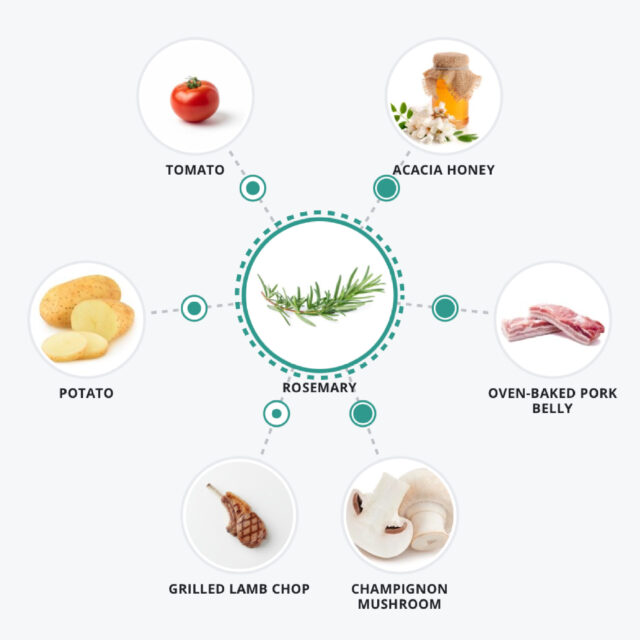
1. Lamb & Pork
Rosemary is a quintessential partner for both lamb and pork. Lamb’s rich, gamey notes find a perfect counterpoint in rosemary’s herbaceous and slightly medicinal 1,8-cineoleand savory spice phenols. Similarly, the succulent fat and mild flavor of pork provide an ideal backdrop for rosemary’s assertive notes; the herb’s spice phenols and 1,8-cineole cut through the richness, while its piney notes add complexity. Try a slow-roasted leg of lamb with garlic, lemon zest, and plenty of fresh rosemary, or consider a pork loin crusted with rosemary and fennel.
2. Potatoes
Earthy and starchy, potatoes provide an excellent canvas for rosemary. The herb’s 1-octen-3-ol (earthy) and 1,8-cineole (fresh) compounds elevate the humble potato, creating a comforting yet sophisticated side dish. Think rosemary-infused roast potatoes or a creamy gratin.
3. Mushrooms
An intriguing pairing rooted in shared earthiness. Rosemary’s 1-octen-3-ol compound is prominently found in mushrooms, creating a direct aromatic bridge. This makes for a surprisingly harmonious combination. Sautéed wild mushrooms with a hint of rosemary are a revelation.
4. Tomatoes
The sweet acidity and umami depth of tomatoes provide a vibrant contrast to rosemary’s herbaceous profile. Rosemary’s 1,8-cineole and 3-octanone (fruity, green) find complementary notes in ripe tomatoes. Perfect for a rich tomato sauce or a fresh bruschetta.
5. Honey
The sweetness of honey offers a delightful balance to rosemary’s slight bitterness and strong herbaceous notes. The waxy, green notes of rosemary’s 1-nonanol can find an interesting counterpoint in the floral complexity of honey. A rosemary-infused honey glaze for roasted carrots or chicken is exquisite.
Explore rosemary pairings on Inspire for even more scientifically-backed ideas.
3 Unexpected Rosemary Pairings
Moving beyond the obvious, the Foodpairing methodology allows us to uncover truly surprising yet harmonious combinations. These unexpected rosemary pairings highlight the versatility of the herb, inviting chefs and home cooks to push culinary boundaries.

1. Dark Chocolate
While seemingly disparate, the deep, complex notes of dark chocolate share fascinating aromatic territory with rosemary. The earthy 1-octen-3-oland warm spice phenols in rosemary find a surprising resonance with the roasted, bitter, and sometimes fruity notes in high-quality dark chocolate.
2. Strawberries
The vibrant sweetness and subtle acidity of strawberries might seem an unlikely partner for rosemary, yet their aromatic profiles share intriguing commonalities. Rosemary’s subtle 3-octanone (fruity, green) and 1-nonanol (fatty, green) compounds find a surprising echo in the fresh, green, and sweet notes of ripe strawberries. This pairing creates a delightful balance, where the herb’s herbaceousness adds depth without overpowering the fruit. Imagine a rosemary-infused strawberry jam or a balsamic glaze with rosemary and strawberries.
3. Coffee
A truly audacious pairing, coffee and rosemary reveal a shared complexity rooted in their earthy and roasted dimensions. Rosemary’s 1-octen-3-ol (earthy), 3-carene (piney), and warm spice phenols resonate with the deep, sometimes woody, and often piney undertones found in various coffee beans. The bitterness of coffee can be beautifully complemented by rosemary’s fresh notes, creating a sophisticated and robust flavor experience. Consider a coffee-and-rosemary rub for red meats or a daring dessert application.
Discover your own pairings with our Foodpairing® Tool by subscribing now. Already have an account? Log in.